
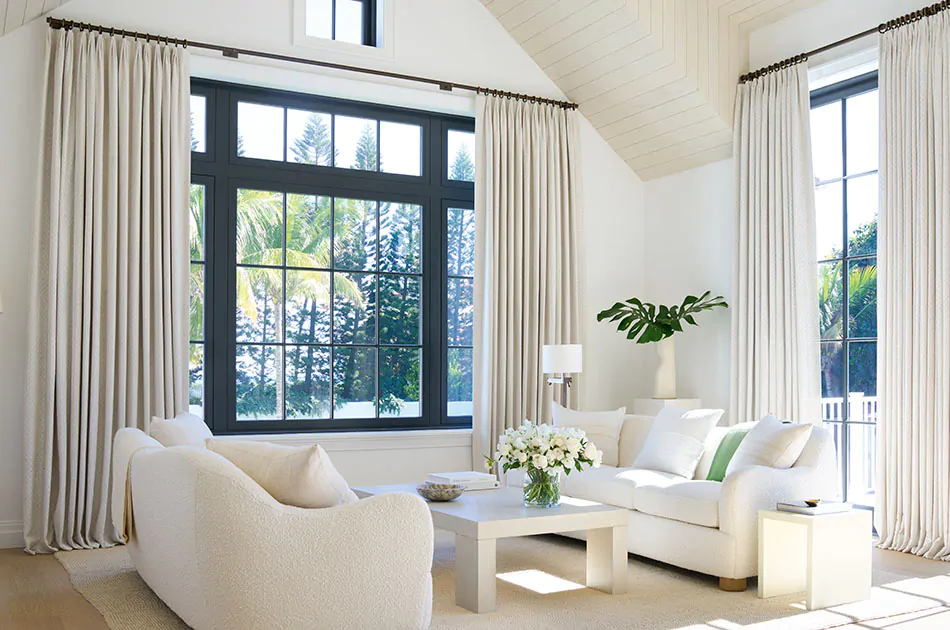
Yes—in most situations, should drapes touch the floor is a definitive yes. Drapes that stop several inches above the ground look unintentional and visually “chop” the wall, making your ceilings feel lower and windows look smaller. The only real exceptions are high-humidity areas like kitchens or bathrooms where practicality outweighs aesthetics. For a modern 2026 look, “kissing” the floor (touching by mere millimeters) or a slight 1-inch “puddle” for formal rooms are the top design choices.
That said, “touching the floor” can mean several different things – and the right answer depends on the room, the style, and the look you’re going for.
The 4 Drape Length Options
Interior designers recognize four distinct drape lengths, each with its own visual effect and appropriate use.
| Length Style | How Long | Best For | Vibe |
|---|---|---|---|
| Float (hover) | ½ inch above floor | Any room; most versatile | Clean, modern, casual-formal |
| Kiss | Just touching the floor | Living rooms, bedrooms | Classic, polished |
| Break | 1-3 inches pooling | Formal living rooms, dining rooms | Traditional, tailored |
| Puddle | 6-16 inches pooling | Master bedrooms, formal spaces | Romantic, luxurious, theatrical |
Float (The Most Practical Choice)
The “float” – where drapes hang about ½ inch above the floor – is the choice of most interior designers for everyday spaces. It reads as intentional without requiring the floor beneath to be perfectly dust-free. Drapes won’t drag when opened and closed, and they don’t collect debris.
Best for: Living rooms, family rooms, home offices, most bedrooms
Advantage: Forgiving of uneven floors; easier to keep clean
Kiss (The Classic Standard)
The “kiss” length – where the fabric just barely touches the floor – gives a very polished, deliberate look. It requires accurate measurement and relatively level floors.
Best for: Formal living rooms, dining rooms, guest bedrooms
Advantage: Most sophisticated appearance; works in formal and casual spaces
Break (For Formal Rooms)
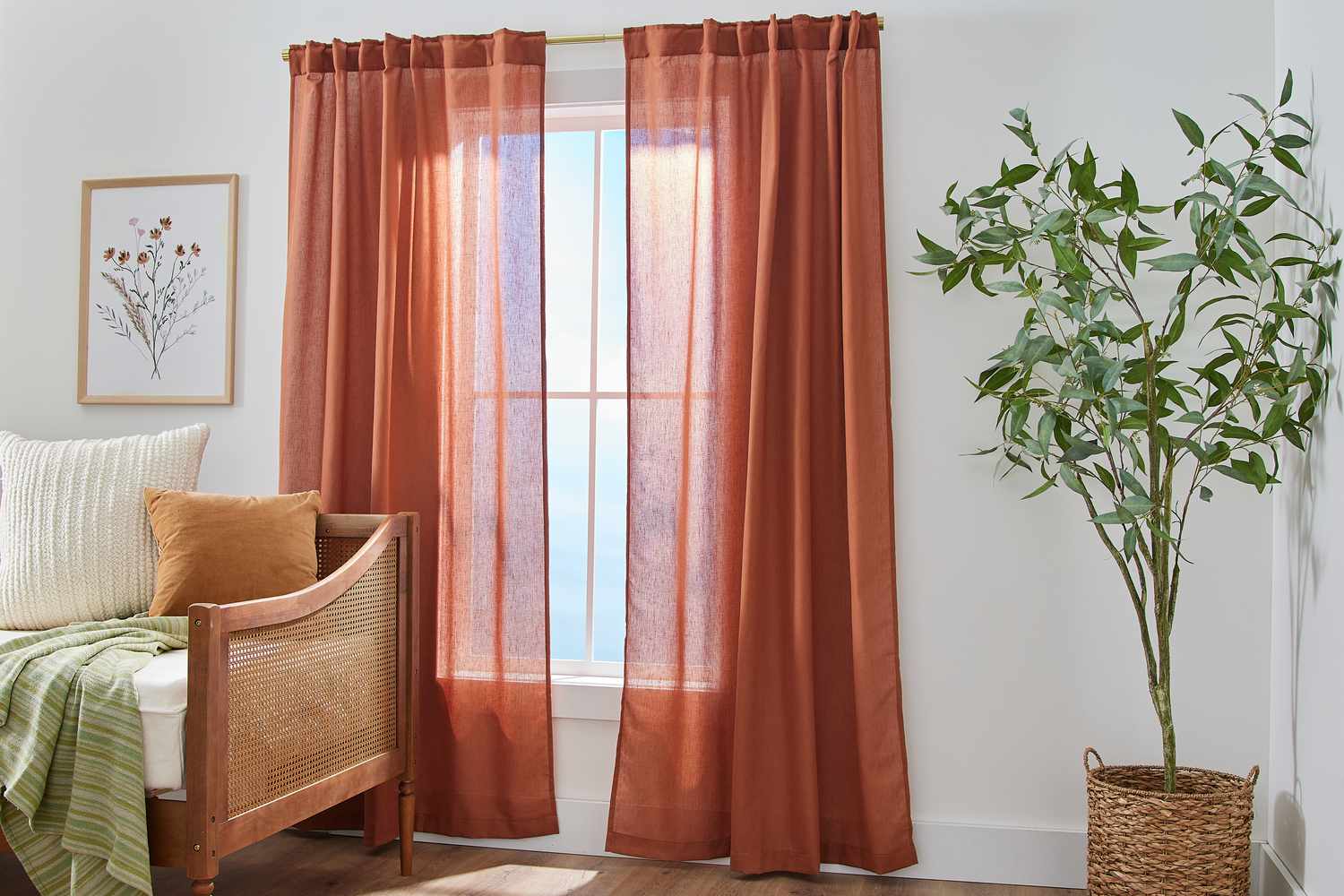
A small break (1-3 inches of extra fabric that folds against the floor) adds an intentional elegance, particularly with heavier fabrics like velvet or linen. Too much break looks sloppy; 1-2 inches looks refined.
Best for: Formal rooms, traditional décor styles
Advantage: Forgiving measurement-wise; very classic
Puddle (For Drama)
Puddled drapes are intentionally theatrical – 6 to 16 inches of extra fabric flowing onto the floor. This style is borrowed from 18th-century European estate homes and works best with heavy, structured fabrics (velvet, jacquard, heavyweight linen).
Best for: Master bedrooms, formal sitting rooms, spaces with high ceilings
Consideration: Collects dust and pet hair; difficult to clean; not practical for high-traffic areas
When Drapes Should NOT Touch the Floor
There are real situations where shorter drapes make sense:
| Situation | Better Length | Reason |
|---|---|---|
| Kitchen windows | Sill length or apron | Impractical near water and cooking |
| Bathrooms | Sill length | Moisture and humidity |
| Near radiators/baseboard heaters | Clear heaters by 6″+ | Fire hazard with floor-length drapes |
| Kids’ rooms | Sill or apron length | Safety – kids can pull puddled fabric |
| Very casual spaces | Functional length | Cleaning and practicality |
How to Hang Drapes to Make a Room Look Larger
This is where drape placement makes or breaks a room:
Mount the rod high – 4-6 inches below the ceiling (not just above the window frame). This draws the eye upward and makes the ceiling feel taller.
Mount the rod wide – 6-12 inches beyond each side of the window frame. When drapes are open, they stack on the wall and the window appears wider.
Use floor-length drapes – even for small windows. Short drapes make windows look squat; floor-length drapes make even small windows feel significant.
The Practical Measurement Formula
- Decide which length style you want (float, kiss, break, or puddle)
- Measure from where the rod will sit to the floor
- Add or subtract based on your chosen style:
– Float: subtract ½ inch
– Kiss: use the exact measurement
– Break: add 1-3 inches
– Puddle: add 6-16 inches
- Order or hem to that length
Most ready-made drapes come in standard lengths: 63″, 84″, 95″, 96″, 108″. Choose the closest length and hem if needed.
The Bottom Line
Drapes should almost always touch or come close to the floor – the specific length depends on the room’s formality and your style preference. The float and kiss lengths work in virtually every space. Save the puddle for rooms where drama is intentional. And wherever you hang them, mount the rod high and wide – that single decision does more for a room’s appearance than any other drapery choice.