
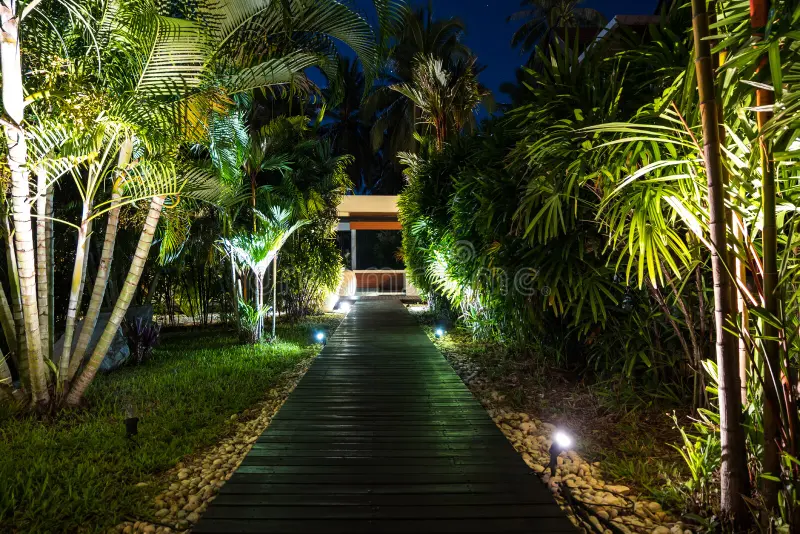
Visitors often associate this immersive setting with a phuket patong beach resort that blends landscape design with elevated viewpoints. Filtered sunlight moves across foliage and textured ground surfaces. Natural alignment guides slow exploration without visual interruption. Each step becomes part of a composed transition between the enclosed garden and calm and open sky views.
Curved Walkways Framing Expanding Vistas
Gentle pathway bends reveal the horizon in gradual sequences. Directional flow encourages steady movement toward viewing platforms.
- Stone edging maintains route clarity during evening illumination
- Layered planting softens visual boundaries along walking lines
- Subtle elevation shifts enhance depth perception across terrain
- Resting niches allow pause without blocking circulation
Curved planning sustains anticipation through the journey.
Layered Foliage Creating Shaded Progression
Dense planting moderates daylight intensity across open sections. Natural canopy produces a cooler walking atmosphere.
- Broad leaf clusters diffuse direct sunlight effectively
- Vertical plant grouping forms organic visual corridors
- Ground cover textures define path edges gently
- Seasonal bloom variation adds changing colour sequences
Foliage layering enriches spatial rhythm.
Resting Corners along Garden Routes
Seating pockets encourage reflection between longer walking stretches. Low walls double as informal pause points.Open views remain visible from shaded spots.Balanced spacing maintains circulation flow.
Elevated Clearings for Horizon Alignment
Open platforms provide the first uninterrupted sight of the distant waterline. Many travellers choose a phuket patong beach resort for these framed visual moments.Height difference expands the viewing angle significantly.Minimal railing preserves visual continuity.Orientation follows the path axis.
How Do Garden Routes Shape Guest Movement
Progressive layout slows walking pace naturally. Directional planting prevents visual confusion.Segmented clearings create rhythmic pauses along the journey. Continuous shade allows longer exploration periods.
What Enhances the Sense Of Arrival?
Final viewing points appear after enclosed green corridors. Sudden openness increases visual impact.Soft seating orientation aligns directly toward distant scenery. Balanced proportions prevent crowding near edges.
Lighting Scheme For Evening Circulation
Low-level illumination maintains path visibility after dusk. Warm tones complement the surrounding greenery.
- Embedded lights outline route without harsh brightness
- Step markers improve safety across level changes
- Concealed fixtures protect natural visual character
- Reflective stone enhances subtle night glow
- Tree-mounted lanterns create layered light depth
- Directional beams highlight resting pockets gently
- Energy-efficient units support long nightly operation
- Shadow control preserves a calm atmosphere
Water Features Guiding Spatial Transition
Narrow reflective channels mirror surrounding plants. Soft sound marks movement between zones.Flow direction aligns with the walking route.
Material Harmony within Landscape Planning
Natural tones connect built elements to the planting palette. Repetition maintains visual unity.Weather-resistant finishes extend durability.Muted colours support long-term clarity.
Garden Journey Shaping Lasting Impressions
Layered greenery creates a gradual transition toward expansive sky views. Textured pathways guide movement without urgency. Elevated clearings provide visual reward after shaded progression. Balanced lighting extends usability beyond daylight. Tropical garden pathways leading toward panoramic Andaman horizon backdrops become a composed journey that connects landscape depth with distant waterline stillness.