
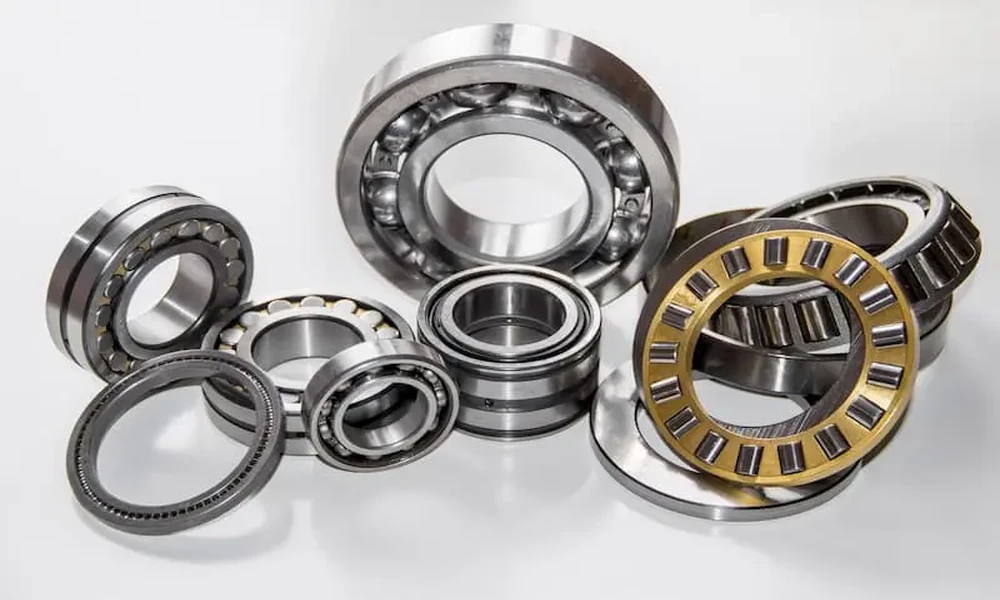
Industrial machinery serves as the foundational core of modern manufacturing infrastructure, where high-speed rotation and heavy load distribution dictate overall plant efficiency. To prevent catastrophic mechanical breakdowns and mitigate severe frictional wear, machinery relies heavily on precision components designed to support moving shafts. In a highly competitive industrial sector, selecting a high-quality ball bearing cartridge assembly-known in Thai as “ตลับลูกปืน“-is essential to maintaining peak operational capacity across automated assembly lines.
Choosing the incorrect style can lead to sudden thermal generation, rapid physical deformation, and costly unplanned downtime. Understanding the specific mechanical classifications, structural behaviors, and environmental tolerances of different designs allows facility engineers to isolate load variables properly, balance directional forces, and maximize the overall operational lifespan of complex industrial equipment.
1. Ball Bearing Cartridge
The standard rolling-element configuration utilizing spherical components represents the most versatile and widely deployed design in the modern machinery landscape. Inside a typical ball bearing cartridge, a set of precisely engineered steel spheres rolls smoothly within polished inner and outer rings. Because the balls make point contact with the raceways, frictional resistance is kept exceptionally low, allowing the shaft to rotate at maximum velocities with minimal heat generation. This structural configuration allows the unit to handle high radial loads alongside minor axial forces efficiently. Due to their low-torque performance and outstanding energy efficiency, these units are extensively utilized in electric motors, high-speed automated conveyors, centrifugal fluid pumps, and precision robotics where smooth, silent, and low-vibration rotational travel is strictly required.
2. Roller Bearing
When industrial operations transition away from high-speed precision and shift toward heavy-duty, high-impact manufacturing, alternative rolling elements must be utilized. This category replaces spherical balls with cylindrical, tapered, or spherical rollers to optimize load distribution over a significantly larger surface area. By utilizing line contact instead of point contact, these heavy-duty components can support immensely higher radial or thrust forces without experiencing structural fatigue or metal deformation. Cylindrical variations handle massive perpendicular loads in heavy machinery gearboxes, while tapered versions are explicitly engineered to endure severe combined axial and radial forces found in automotive axles and heavy construction equipment. Their robust build ensures maximum structural rigidity under extreme operating conditions.
3. Plain Bearing
Departing completely from internal rolling components, this category relies on sliding contact surfaces to facilitate motion control. Often referred to simply as bushings or journal bearings, these compact components feature no moving balls or rollers; instead, the rotating shaft slides directly against a high-lubricity inner sleeve made of bronze, engineered plastics, or composite materials. The lack of internal rolling elements allows this design to handle immense static loads and absorb severe mechanical shocks or vibrations that would instantly shatter standard rolling rings. Because they boast a minimal physical profile and operate exceptionally well in low-speed, high-pressure environments, they are deeply integrated into heavy hydraulic cylinders, agricultural pivot joints, marine propeller shafts, and mining equipment where spatial limitations and brutal environments prevent the use of standard external housings.
Selecting the proper industrial component, such as a high-performance ball bearing cartridge, is a critical engineering decision that directly influences factory throughput and long-term machinery maintenance costs. Failing to match the exact bearing architecture to your system’s load types, speed thresholds, and environmental hazards will inevitably lead to premature structural failure and expensive production delays.
For industrial enterprises looking to secure absolute mechanical reliability, partnering with a verified, premier distributor is essential. I.N.B. Enterprise stands as a market-leading engineering partner, supplying a comprehensive and authentic inventory of high-grade linear motion and rotational components. Their specialized technical team provides end-to-end technical support and tailor-made application assessments to help you isolate your exact mechanical requirements accurately. Lower your facility’s maintenance overhead, eliminate unexpected breakdown risks, and upgrade your factory’s mechanical longevity by trusting the expert distribution network at I.N.B. Enterprise today.