
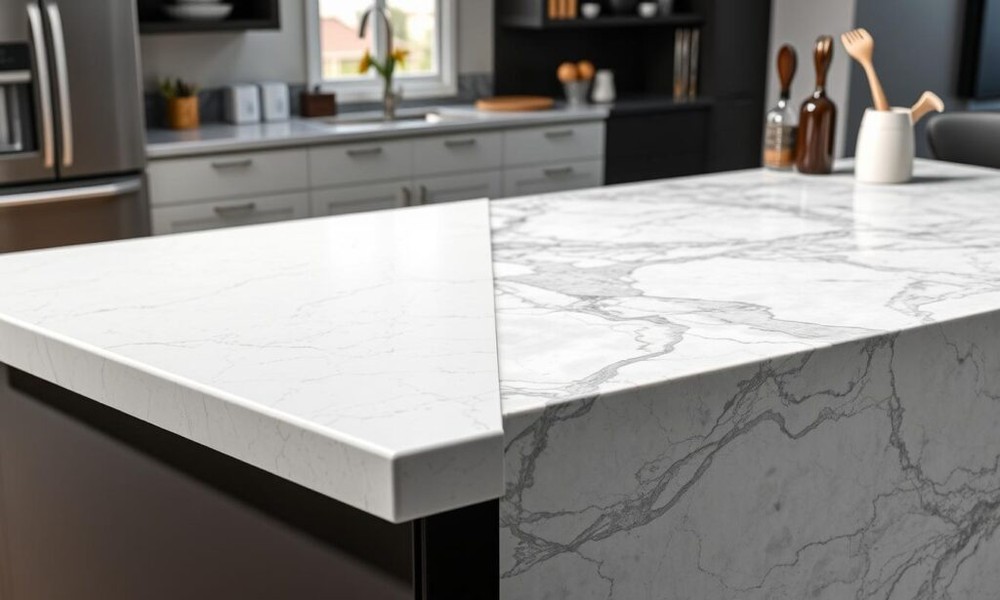
A stunning quartz countertop often feels like the heart of a modern kitchen, but how well does it stand up to Montreal’s icy winters or a sun-filled kitchen? The answer lies not just in the material’s natural resilience, but in how it interacts with its surroundings each day.
Environmental Factors Impacting Quartz Countertop Durability
The lifespan of a quartz countertop is shaped as much by its environment as by its craftsmanship. While quartz is engineered for strength, diverse environmental factors , from sunlight streaming through a window to humidity levels fluctuating with the seasons , can influence its appearance and integrity over time.
Natural Climate Conditions: Heat, Humidity, and UV Exposure
Quartz is engineered to handle a range of temperatures, yet persistent exposure to extreme heat can affect its resin binders. A hot pot left directly on the surface may not crack quartz, but repeated incidents can cause discoloration or dulling. Humidity, especially in older homes with less insulation, may not warp quartz, but it can foster mold or mildew at the seams if installation isn’t flawless. Sunlight poses its own threat: relentless UV rays can gently fade the rich natural hues of quartz, particularly in spaces with large, south-facing windows.
Indoor vs. Outdoor Installation: Environmental Variances
Indoors, quartz countertops bask in climate-controlled predictability. Outdoors, however, they encounter everything from acid rain to freeze-thaw cycles. These harsher elements can speed up surface degradation, making material choice and quality a critical consideration for outdoor kitchens or bar areas.
Comparing Quartz to Other Popular Countertop Materials
The real test of quartz’s durability comes from seeing how it performs next to other popular countertop options.
Quartz vs. Granite: Resistance to Environmental Stress
Both quartz and granite offer impressive toughness, but quartz’s engineered nature often gives it a leg up in resisting common environmental stressors. Granite is porous, requiring regular sealing to fend off moisture and stains, whereas quartz’s dense, resin-bound surface shrugs off most kitchen spills. However, under intense direct heat, granite is slightly less likely to discolor than quartz.
Quartz vs. Marble: Hardness and Maintenance Under Different Conditions
Marble’s elegance comes with vulnerability. It’s noticeably softer than quartz, making it more susceptible to scratching, etching, and staining, particularly from acidic substances like lemon juice. Quartz, on the other hand, maintains its luster and resists stains even in busy family kitchens.
| Material | Heat Resistance | Stain Resistance | UV Resistance | Maintenance |
|———-|—————-|——————|————–|————-|
| Quartz | Moderate | High | Moderate | Low |
| Granite | High | Moderate | High | Moderate |
| Marble | Low | Low | Low | High |
Material Composition and Environmental Resistance
What gives quartz its edge? It’s a blend: about 90-95% natural quartz crystals fused with resins and pigments. The resin provides flexibility and prevents microcracks, while quartz itself brings density and hardness.
Role of Resin and Natural Quartz in Durability
Resin helps quartz resist shocks and creates a surface that’s less prone to chipping or splitting. However, those resins can be sensitive to prolonged, intense sunlight or high heat, leading to gradual fading or yellowing.
Impact of Low Carbon and Eco-friendly Manufacturing Processes
Modern premium quartz options, like those found at Kitchen Wholesalers countertops in Montreal, embrace low carbon manufacturing. This not only reduces environmental impact but often leads to cleaner, more consistent slabs with fewer impurities, boosting both durability and aesthetic appeal.
Effects of Moisture and Water Absorption on Quartz Integrity
Water absorption is the unseen enemy of many countertop materials, leading to swelling, warping, or stains.
Low Water Absorption Explained
Quartz’s engineered surface is nearly nonporous, with water absorption rates often under 0.5%. This minimizes the risk of stains and makes cleanup a breeze, even after a spilled glass of wine or sauce.
Comparing Quartz’s Moisture Resistance with Alternative Surfaces
Granite and especially marble can develop dark spots or even structural damage if unsealed or poorly maintained. Quartz offers peace of mind, especially in homes with young children or frequent entertaining.
Chemical Exposure: Acid and Alkali Resistance in Daily Use
Life in the kitchen isn’t always gentle. Acidic foods, cleaning agents, and even air pollutants can wear down lesser surfaces.
How Environmental Pollutants Affect Quartz Surfaces
Quartz stands up well to most acids and bases used in kitchens. However, harsh chemicals like paint removers or undiluted bleach can dull its sheen. Everyday exposure, even in urban settings, rarely poses a problem for quality quartz slabs.
Best Practices to Protect Quartz from Chemical Damage
Wipe spills quickly, use pH-neutral cleaners, and steer clear of abrasive pads. These small steps will help your surface stay brilliant for years, regardless of environmental contaminants.
Long-Term Wear and Tear: Scratches, Stains, and Fading
Over time, countertops bear the marks of daily life , sometimes literally.
Durability of Natural Color Under Environmental Stress
While quartz resists fading better than marble, prolonged sunlight can eventually lighten its pigments. Positioning and window treatments can help preserve that original vibrancy.
Maintenance Differences: Quartz vs. Other Engineered Stones
Compared to other engineered stones, quartz’s upkeep is refreshingly simple. A wipe-down with soapy water suffices, with no regular sealing required.
Choosing the Right Quartz Grade for Specific Environmental Conditions
Not all quartz is created equal. Understanding the grades can make or break your surface’s longevity.
Premium Quartz Options and Their Unique Benefits
Higher-grade quartz features tighter compaction and more refined resins, offering superior resistance to heat, acids, and stains. These are the kinds of options trusted by renovation experts across Montreal.
How to Select Quartz for Different Climates and Usage Patterns
In sunny kitchens, consider lighter colors to minimize visible fading. For outdoor use, opt for slabs specifically rated for exterior installation, even if it means a higher initial investment.
Care and Cleaning Strategies to Enhance Durability
Thoughtful care is the ultimate line of defense against environmental wear.
Recommended Cleaning Products and Techniques
Mild dish soap, warm water, and a soft cloth are usually all that’s needed. For tougher messes, a glass-cleaning spray can add extra sparkle without risk.
Preventative Measures Against Environmental Damage
Use trivets for hot pans, blot spills quickly, and avoid harsh chemicals. These habits go a long way in safeguarding your quartz against whatever the environment throws its way.
In the end, the secret to lasting countertops lies not just in selecting a beautiful slab, but in understanding how environmental factors shape its story over time. By making informed choices and simple maintenance routines, your quartz countertop can remain a durable centerpiece, come rain or shine.